

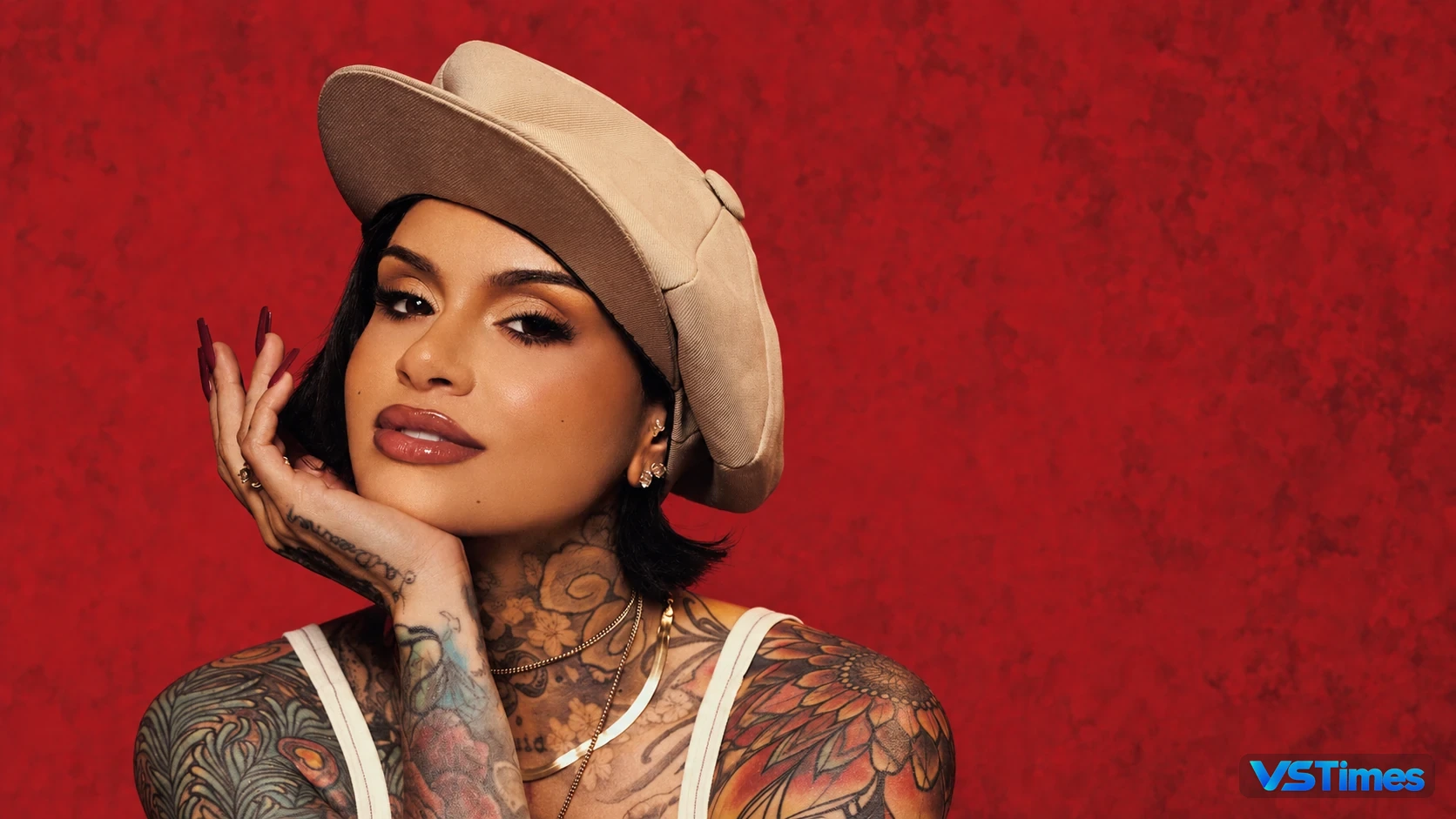
Kehlani has repeatedly described themself as mixed or mixed-race. In a 2018 interview with PAPER, Kehlani called themself a “mixed woman.” That same year, CBS Bay Area reported that Kehlani described their ethnicity as Black, White, Native American, Filipino and Spanish.
The broader ancestry picture is less simple than many celebrity-bio pages suggest. Reputable profiles published at different times use somewhat different terms, and an earlier FADER profile recorded uncertainty around the Filipino part of Kehlani’s family history. The most defensible answer to the question of Kehlani’s race is therefore direct: Kehlani identifies as mixed-race, with Black, White and Native American ancestry consistently appearing in strong profiles, while other elements of the ancestry record require attribution and context.
Kehlani Ashley Parrish is an American R&B singer and songwriter raised in the Bay Area. Their career developed from youth arts training and the group PopLyfe into an independent solo breakthrough, major-label albums, Grammy recognition and a 2026 world tour.
Need to know
- Kehlani has repeatedly identified as mixed or mixed-race.
- CBS reported in 2018 that Kehlani described their ethnicity as Black, White, Native American, Filipino and Spanish.
- Black, White and Native American ancestry appear consistently across several strong profiles.
- Filipino heritage appears in later descriptions, though a 2015 FADER profile recorded uncertainty within the family at that time.
- By September 2026, Kehlani was a two-time Grammy winner with a new self-titled album and an active world tour.
Kehlani profile summary
| Detail | Verified information |
|---|---|
| Full name | Kehlani Ashley Parrish |
| Profession | R&B singer and songwriter |
| Raised in | Oakland, California, and the wider Bay Area |
| Education | Oakland School for the Arts |
| Early group | PopLyfe |
| Early solo release | Cloud 19 (2014) |
| Breakthrough project | You Should Be Here (2015) |
| Current album | Kehlani (2026) |
| Grammy record | 2 wins and 7 nominations through the 68th Grammy Awards |
Mixed-race identity and the ancestry record
Kehlani’s own language is the strongest evidence for how they identify.
In the 2018 PAPER interview, Kehlani discussed how race shaped the way other people perceived them and said, “I’m a mixed woman who is white presenting at times.” PAPER itself described Kehlani as Black, White, Native American and Hispanic.
Two years later, theJasmineBRAND reported a May 2020 Twitter statement in which Kehlani said it was “OK to call me mixed.” The same statement emphasized that being described as mixed did not erase Kehlani’s Black identity. Because the original post was not independently preserved in the research record, that 2020 wording is best treated as a contemporaneous secondary account of Kehlani’s statement.
A later 2024 filing quoted by Vulture used even more explicit language: Kehlani wrote, “I am mixed race.” The legal dispute surrounding that document is unrelated to this profile and does not need to be expanded here; the relevance is simply that Kehlani again used mixed-race language about themself.
Across those statements, the core identity is consistent. Kehlani does not frame “mixed” and “Black” as mutually exclusive categories. Instead, the public record shows Kehlani identifying as mixed-race while also speaking directly about being Black.
Why different sources list different ethnicities
The detailed ancestry descriptions are not identical.
The clearest compact list comes from CBS Bay Area, which reported in June 2018 that Kehlani described their ethnicity as Black, White, Native American, Filipino and Spanish.
An earlier FADER cover profile used a more qualified formulation. It described Kehlani as Black, White and Native American, then said Kehlani’s mother had told them there was Filipino ancestry in the family but that other relatives had not confirmed it at that time.
That distinction matters. Later profiles, including CBS, continue to include Filipino heritage, so it clearly remained part of Kehlani’s public description. But the FADER account shows why it would be too strong to present every ancestry label as independently documented genealogy.
A later Numéro profile, updated in 2026, says Kehlani defines themself as Black, White, Native American, Spanish, Mexican and Filipino. PAPER, meanwhile, used the broader term Hispanic in its 2018 profile.
Those words are not interchangeable. Spanish, Hispanic, Mexican and Latina describe different concepts, and the strongest material reviewed here did not establish “Latina” as Kehlani’s own explicit preferred identity label. The responsible approach is to preserve the wording used by each source rather than merge the terms into a supposedly definitive category.
The same caution applies to specific Indigenous ancestry. Native American heritage appears consistently in the strongest profiles, but no authoritative source in the verified record established a particular tribe, tribal citizenship or enrollment. Claims assigning Kehlani to a specific tribe should therefore be omitted unless stronger evidence emerges.
There is also no credible basis for publishing ancestry percentages or for assigning specific ethnic backgrounds to each parent.
Oakland roots and arts training
Kehlani’s public identity is closely connected to the Bay Area.
CBS reported that Kehlani grew up in Oakland and quoted the singer describing the city as a place that taught them not to compromise who they were or forget where they came from. That comment gives the Oakland connection more substance than a simple hometown label.
The more detailed FADER profile places Kehlani’s birth in a South Berkeley apartment before a childhood spent primarily in North Oakland. Because later profiles sometimes simplify the birthplace to Oakland, “raised in Oakland” or “Bay Area-raised” is the clearest wording for this profile.
Kehlani was raised largely by an aunt. The FADER account documents instability in the family during childhood, but the most relevant thread for the music career is the role of arts training.
Dance came first. Kehlani trained seriously through childhood and junior high before an injury redirected attention toward singing. At Oakland School for the Arts, that shift became more concrete, and the school later listed Kehlani among its notable alumni.
The change from dance to music became one of the first clear turning points in the career.
PopLyfe and the independent breakthrough
At 14, Kehlani joined the local cover band PopLyfe as a vocalist. The group performed frequently and competed on America’s Got Talent in 2011, finishing fourth.
The exposure mattered, but Kehlani’s more important career development came after the group. The singer eventually pursued music independently and released Cloud 19 in 2014.
That project attracted attention from listeners, artists and labels while preserving the direct relationship Kehlani had already built with fans. FADER reported that Kehlani began recording around Atlantic Records studios and finalized a deal shortly before the April 2015 release of You Should Be Here.
You Should Be Here significantly expanded Kehlani’s audience and later earned Grammy recognition. It also established the model that would define much of the career: personal songwriting, contemporary R&B production and a strong sense of creative ownership.
Kehlani described the work ethic behind that rise in simple terms in the FADER interview: “Hard work always beats talent.” The surrounding discussion focused on songwriting, studio hours and preparation rather than talent as something automatic.
Albums, artistic development and major work
The 2017 studio album SweetSexySavage translated Kehlani’s mixtape-era momentum into a full major-label album cycle.
It Was Good Until It Wasn’t followed in 2020, and blue water road arrived in 2022. The latter marked a more reflective creative period. In the Numéro interview, Kehlani described that record as connected to a process of leaving harmful patterns behind and becoming more deliberate about how the music reflected the person making it.
Kehlani has also identified artists including Lauryn Hill and Erykah Badu as formative influences. The significance of those names is not simply stylistic: Kehlani described learning from artists whose openness showed how music could affect listeners directly.
Outside music, photography became another long-running creative interest. In Numéro, Kehlani recalled having cameras from childhood, including a Nikon inherited from a grandmother at age nine, and later taking photography more seriously as an art form.
The 2024 album Crash opened another phase in Kehlani’s catalog. But the release that produced the biggest award milestone came afterward: “Folded.”
According to the Recording Academy’s official artist record, “Folded” won Best R&B Song and Best R&B Solo Performance at the 68th Grammy Awards. Those were Kehlani’s first Grammy wins, bringing the career total to two wins from seven nominations through that ceremony.
The exact category name is worth preserving. Some promotional material shortened it to Best R&B Performance, but the Recording Academy’s own record identifies the award as Best R&B Solo Performance.
The self-titled 2026 era
Kehlani entered 2026 with a different level of institutional recognition than earlier in the career.
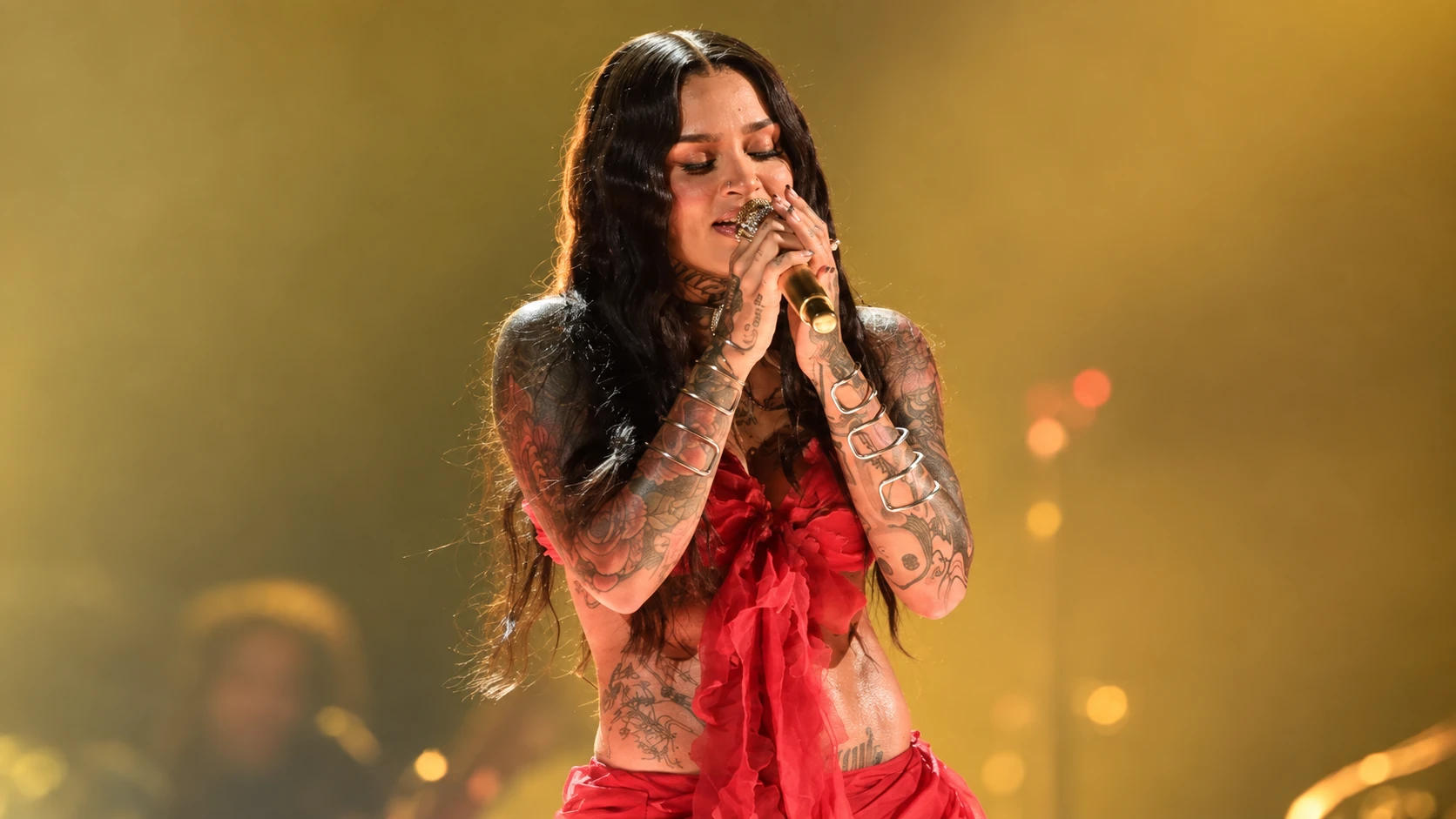
The self-titled album Kehlani was released on April 24, 2026. By then, the singer had spent more than a decade moving between independent mixtapes, studio albums, collaborations and increasingly large tours.
The choice to use the artist’s own name for the fifth album fit a career that had long returned to questions of self-definition, even as the music itself continued to shift in sound and scale.
The 2026 awards cycle added more recognition. BET named Kehlani Best Female R&B/Pop Artist, while “Folded” won Video of the Year.
As of September 16, 2026, Kehlani was also in the middle of the Kehlani World Tour, with additional North American and international dates scheduled. Tour schedules are inherently changeable, but the broader status was clear: Kehlani remained an active recording and touring artist, not a figure whose relevance depended mainly on earlier releases.
Race, identity and public perception
Kehlani’s public comments about race are notable because they resist overly simple classification.
In PAPER, Kehlani acknowledged sometimes being perceived as White-presenting while also describing themself as mixed. In the 2020 statement preserved by theJasmineBRAND, Kehlani explicitly recognized differences in experience between mixed-race Black people and Black women with two Black parents.
That combination of self-identification and qualification is more useful than trying to force Kehlani into a single racial box. It reflects what Kehlani has actually said: mixed-race, Black, and aware that those identities can shape public perception in different ways.
The ancestry question is therefore best handled with two levels of certainty. The first is strong: Kehlani identifies as mixed-race. The second is more qualified: the detailed ancestry lists vary by source and date, especially around Filipino, Spanish, Hispanic and Mexican terminology.
That is why claims about percentages, individual parents or specific tribal affiliation go beyond what the strongest evidence supports.
Conclusion
Kehlani’s race is best described using Kehlani’s own repeated language: mixed or mixed-race. Black, White and Native American heritage appear consistently across strong profiles, while Filipino, Spanish, Hispanic and Mexican descriptions vary somewhat by source and time and are best reported with attribution.
That identity story sits inside a larger career shaped by the Bay Area, arts training, PopLyfe, an independent mixtape breakthrough and more than a decade of solo work. By 2026, Kehlani had added two Grammy wins, a self-titled fifth album and a world tour to that record, making the artist’s current public profile much broader than the ancestry question that often brings readers to it.
